How to Choose a Camping Cot: Comfort, Pack Size, and Tent Clearance
Compare portable camping cots, understand key dimensions, frame heights, and tension systems, and find the right sleep setup for your tent.
Navigate this review
If you buy through links on Sleep & Shelter, we may earn an affiliate commission at no extra cost to you. How affiliate links fund Sleep & Shelter
Sleeping off the ground changes the camping experience completely. A camping cot eliminates the discomfort of uneven terrain, roots, and rocky soil while providing valuable gear storage space underneath. However, choosing the right cot requires balancing frame dimensions, pack weight, ease of assembly, and tent interior clearance.
Whether you need an ultralight low-profile cot for backpacking or a wider, elevated folding bed for car camping, understanding how frame mechanics and fabric tension work will help you choose the right model for your setup.
Key Factors When Evaluating Camping Cots
1. Cot Height: Low-Profile vs. Elevated Frames
Cot height dictates where you can pitch your bed and how easy it is to sit down:
- Low-Profile Cots (approx. 10–18 cm / 4–7 in off the ground): Best for standard backpacking and compact dome tents with sloping walls. They keep you elevated above rocks and damp tent floors without pressing your face against low tent canopies.
- Elevated / High-Low Convertible Cots (approx. 35–40 cm / 14–16 in): Ideal for cabin-style or standing-height tents. They allow natural sitting posture like a household bed and open up substantial under-bed storage for packs and gear bins.
2. Width and Sleeping Surface
Standard cots typically measure between 60 cm and 65 cm (23–25 in) wide. While adequate for back sleepers, side sleepers and broad-shouldered campers often find their arms or knees resting against the rigid side rails. Wide variants measuring 70 cm to 80 cm (27.5–31.5 in) offer significantly better sleeping comfort, though they require a larger tent floor footprint.
3. Assembly and Lever-Lock Tensioners
Traditional camping cots required brute strength to force crossbars into tension holes. Modern portable cots generally utilize shock-corded aluminum side poles and lever-action tension legs. These mechanical clamps provide tight, sagging-free fabric tension with minimal manual effort during setup and breakdown.
Featured Camping Cot Options and Listing Profiles
The following listings reflect seller-advertised specifications for various portable and folding camping beds. Always verify specific dimensions, included leg extensions, and weight capacities with the seller before purchasing.
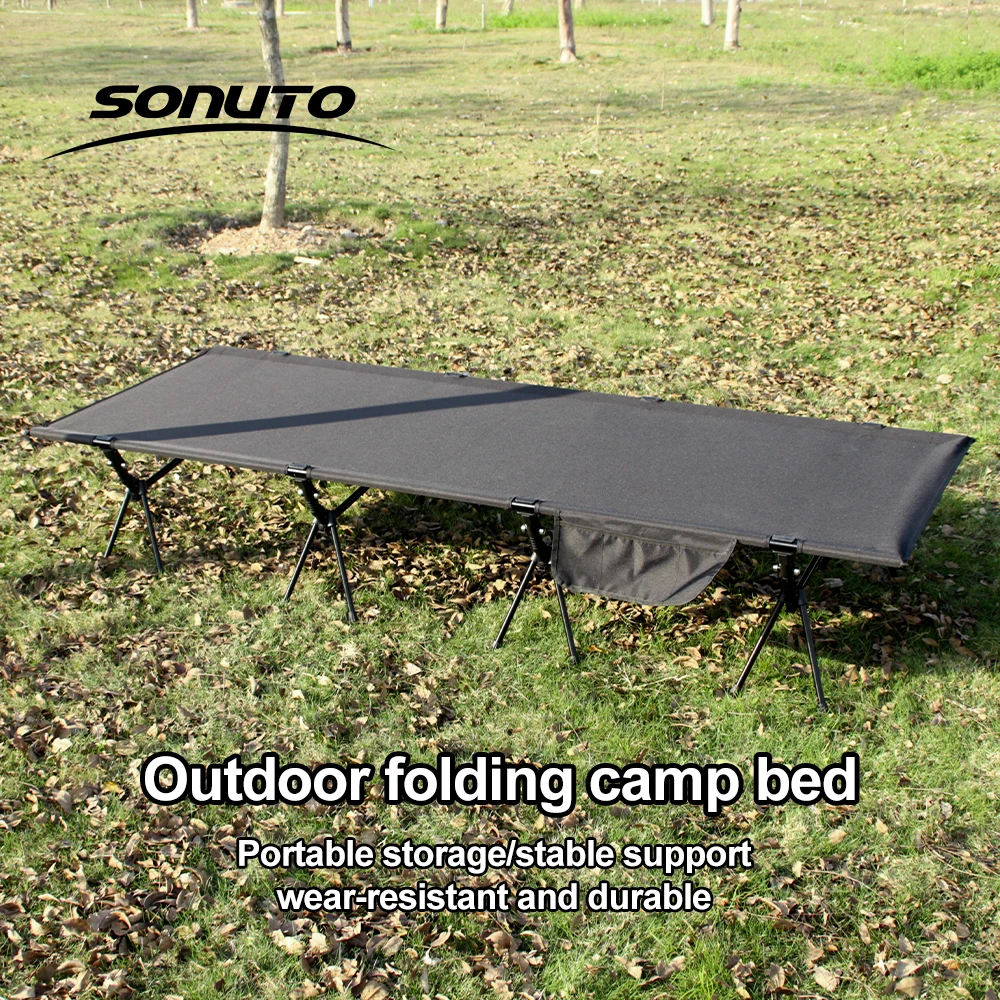
Overview: Advertised by Sonuto Tent Store as an extra-wide (80 cm) and extended-length (210 cm) portable folding bed constructed with 600D Oxford fabric. The listing specifies a 4 kg weight, positioning it as a generous car camping or basecamp option where wider sleeping room is prioritized over ultralight trail weight.
- Key Stated Specs: 210 x 80 cm sleeping surface, 600D Oxford fabric, 4 kg stated weight.
- Buyer Verification: Confirm packed carry bag dimensions and whether leg extensions are included for dual-height use.
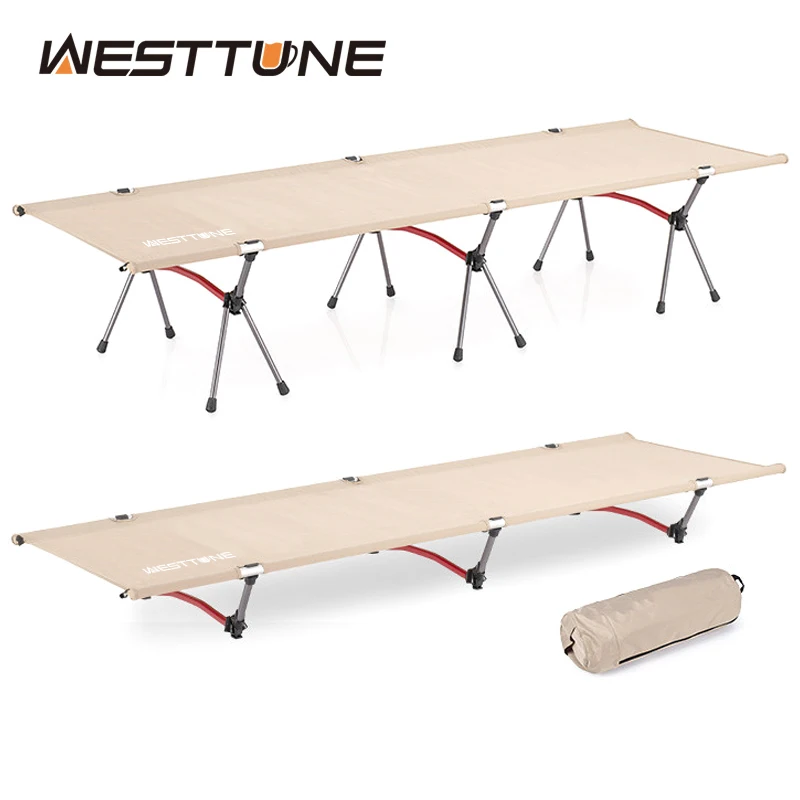
Overview: Offered by WEST TUNE Choice Store, this listing advertises an ultralight aluminum alloy folding cot designed for hiking, backpacking, and outdoor travel. The listing imagery illustrates dual-height leg configurations and a compact cylindrical storage bag.
- Key Stated Specs: Aluminum alloy frame, lightweight folding format.
- Buyer Verification: Clarify whether high-leg extensions are bundled in the base package or sold as an optional variant.
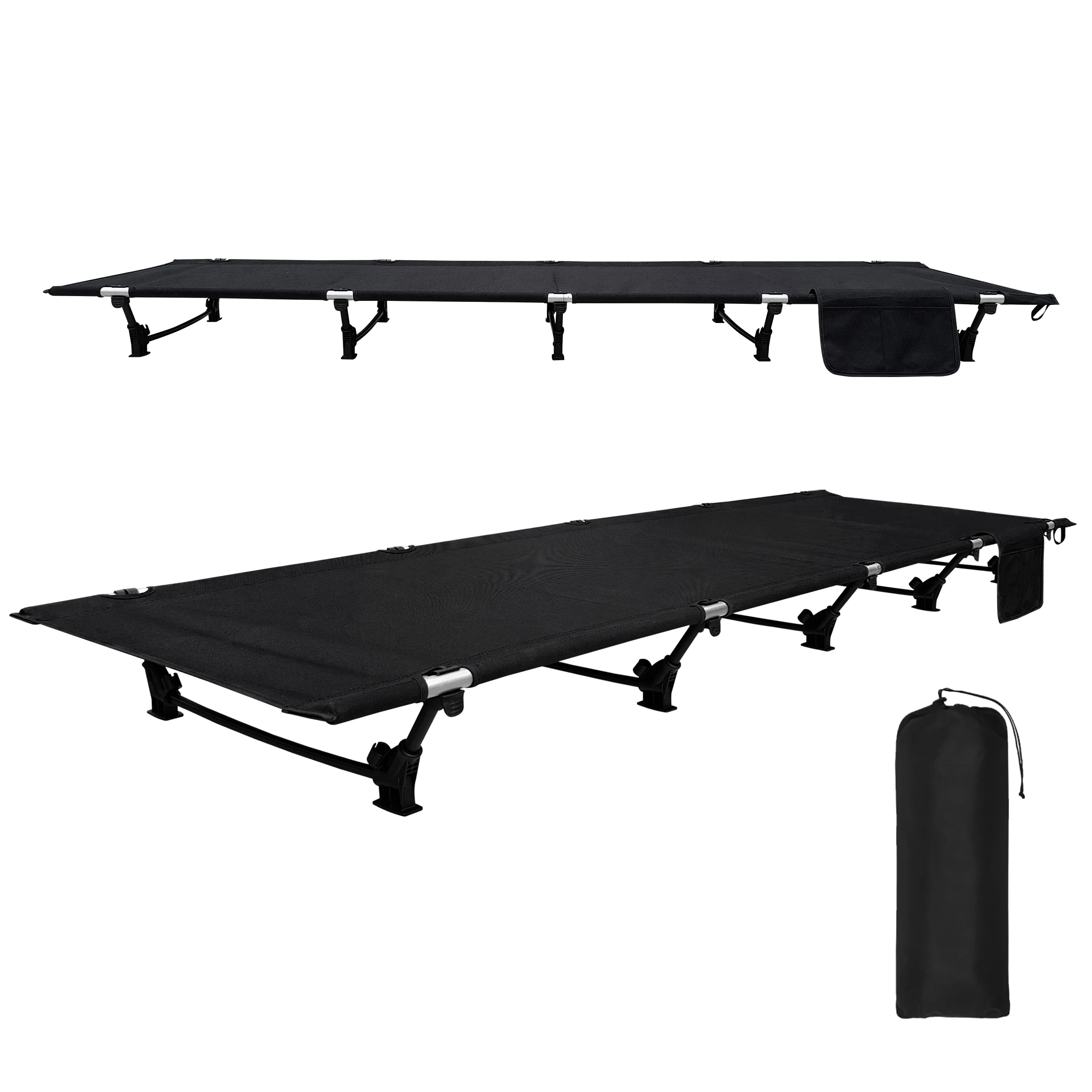
Overview: A compact low-profile tent bed from LIFEWITHCAMP Outdoor Store. Designed with lever-lock crossbars to maintain taut fabric tension close to the ground, making it suitable for lower-profile dome tents and quick weekend shelter setups.
- Key Stated Specs: Compact folding bed format with side storage pouch and stuff sack.
- Buyer Verification: Verify exact fabric denier, overall unfolded width, and maximum supported weight.
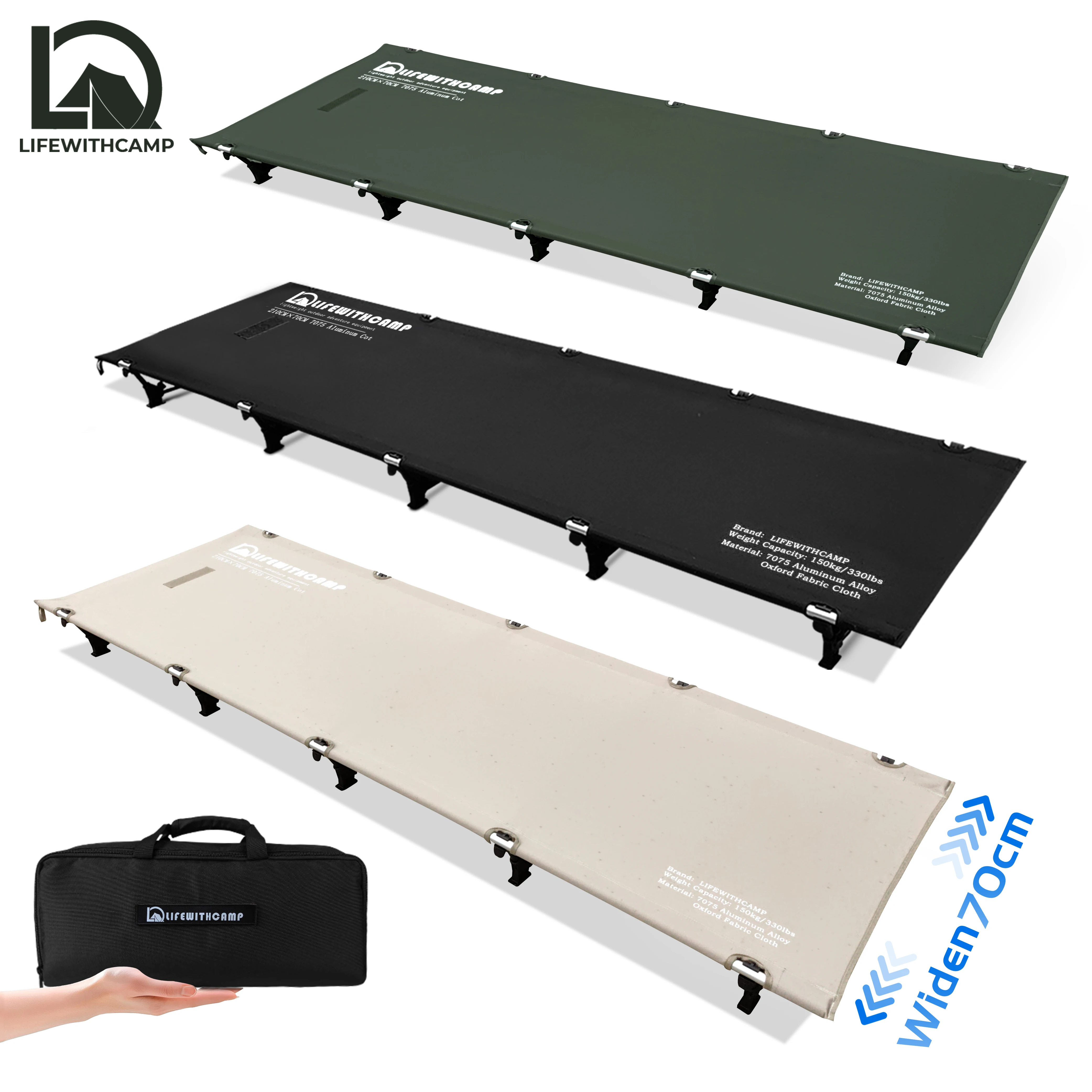
Overview: Offered by Stone's Store, this listing advertises a 70 cm wide portable folding bed. Pictured markings reference 7075 aluminum alloy tubing, Oxford fabric, and an advertised 150 kg (330 lbs) load capacity, offering extra shoulder width while maintaining low ground clearance.
- Key Stated Specs: 70 cm advertised width, 7075 aluminum alloy frame, 150 kg claimed load capacity.
- Buyer Verification: Confirm exact rail-to-rail sleeping width versus total outer frame width before sizing for your tent.
Comparison of Stated Features
| Model / Listing | Advertised Width | Advertised Fabric / Frame | Primary Use Profile |
|---|---|---|---|
| Sonuto 210x80cm Cot | 80 cm (Extra Wide) | 600D Oxford / 4 kg | Basecamp & Car Camping |
| WESTTUNE Alloy Cot | Not specified in title | Aluminum Alloy | Backpacking & Travel |
| LIFEWITHCAMP Compact Cot | Standard Low Profile | Folding Aluminum Frame | Low-Clearance Tents |
| Stone's Store 70cm Cot | 70 cm (Wide) | 7075 Aluminum / Oxford Cloth | Tent Sleeping & Hiking |
Essential Tips for Tent Cot Comfort and Care
Preventing Tent Floor Damage
Cot feet concentrate body weight onto small contact points. To avoid puncturing or abrading your tent's waterproof floor fabric, use cot leg rubber feet protectors or place foam floor squares (or small pieces of closed-cell foam) under each leg bracket.
Managing Cold-Weather Convection
While sleeping elevated keeps you cool in summer, air circulating beneath a cot pulls body heat away quickly in chilly weather. Because sleeping bag insulation compresses under your body, cots offer virtually no insulation on their own. When camping in temperatures below 15°C (60°F), always place an insulated sleeping pad or closed-cell foam mat on top of the cot fabric to block convective heat loss.
Cleaning and Storage
Follow the manufacturer's care instructions for your cot model. Wipe aluminum poles dry after wet or humid trips to prevent corrosion, and ensure the fabric bed is completely dry before packing it away in its carry bag to avoid mold and mildew growth.
More from The Night Shift
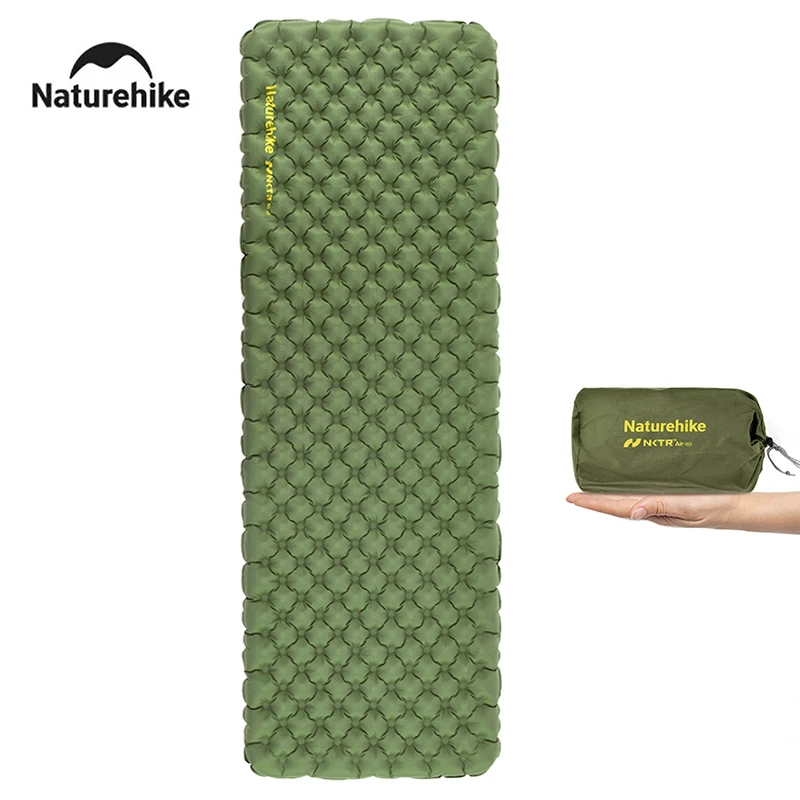
How to Choose the Right Camping Mattress: Thickness, Warmth, and Pack Size
Find the best camping mattress for side sleeping, cold nights, or couples. Compare pad thickness, advertised R-values, and portable inflation gear.