How to Choose the Right Camping Mattress: Thickness, Warmth, and Pack Size
Find the best camping mattress for side sleeping, cold nights, or couples. Compare pad thickness, advertised R-values, and portable inflation gear.
Navigate this review
If you buy through links on Sleep & Shelter, we may earn an affiliate commission at no extra cost to you. How affiliate links fund Sleep & Shelter
A restless night outdoors rarely comes down to your sleeping bag alone. In most tents, comfort and warmth depend entirely on the barrier between your body and the hard ground. Cold earth acts as a continuous heat sink, pulling warmth away through conduction while rocky terrain presses into pressure points like hips and shoulders.
Choosing the right camping mattress requires balancing three core trade-offs: depth (for pressure relief, especially if you sleep on your side), insulation (preventing bottom-side chills), and pack volume (whether you are hauling gear on your back or pitching next to your car trunk).
Key Decision Factors: What to Check Before You Buy
Camping pads fall broadly into pure air mattresses, open-cell foam self-inflating mats, and closed-cell foam pads. To find a model that matches your trip style, look closely at these specifications:
- Thickness and Body Mechanics: Back sleepers can often rest comfortably on 2 to 2.5 inches of air cushion because their weight distributes evenly. Side sleepers, however, concentrate significant downward force at the hip and shoulder. For true side-sleeping comfort without bottoming out against the ground, look for pads offering 3.5 to 4 inches of inflated depth.
- Insulation and R-Value: A thick mattress full of uninsulated air will still leave you freezing in crisp weather because air circulates inside the baffles. Thermal resistance is formally measured under the ASTM F3340 standard. In general, an R-value under 2.0 is strictly for warm summer outings, 2.0 to 3.5 serves general 3-season camping, and values above 4.0 are suited for cold autumn nights and freezing ground. When buying direct from marketplace listings, confirm whether the stated R-value is an estimated seller claim or tested to ASTM standards.
- Single vs. Double Form Factors: Solo pads keep weight down and roll tight, but couples often struggle with two individual mats sliding apart across a slick tent floor. A dedicated double mattress or pads with edge snap-buttons (spliceable sides) keep sleeping surfaces locked together.
- Inflation and Internal Moisture: Inflating a large mattress by mouth introduces breath moisture into the interior, which can promote mold growth and degrade reflective inner foils over time. Built-in foot pumps, inflation dry bags, or rechargeable micro-pumps protect the pad and save your lungs after a long hike.
Highlighted Camping Mattresses & Accessories
The models below represent distinct approaches to outdoor sleeping, from high-insulation ultralight trekking mats to plush camp pads and dedicated pump accessories.
1. High Insulation for Chilly Trails: Naturehike Ultralight Air Mattress
When nights turn chilly, ground chill becomes the primary cause of shivering. This Naturehike model claims an advertised R-value of 4.6, aiming to provide substantial thermal barrier performance in an ultralight, highly packable format designed for backpacking and hiking.
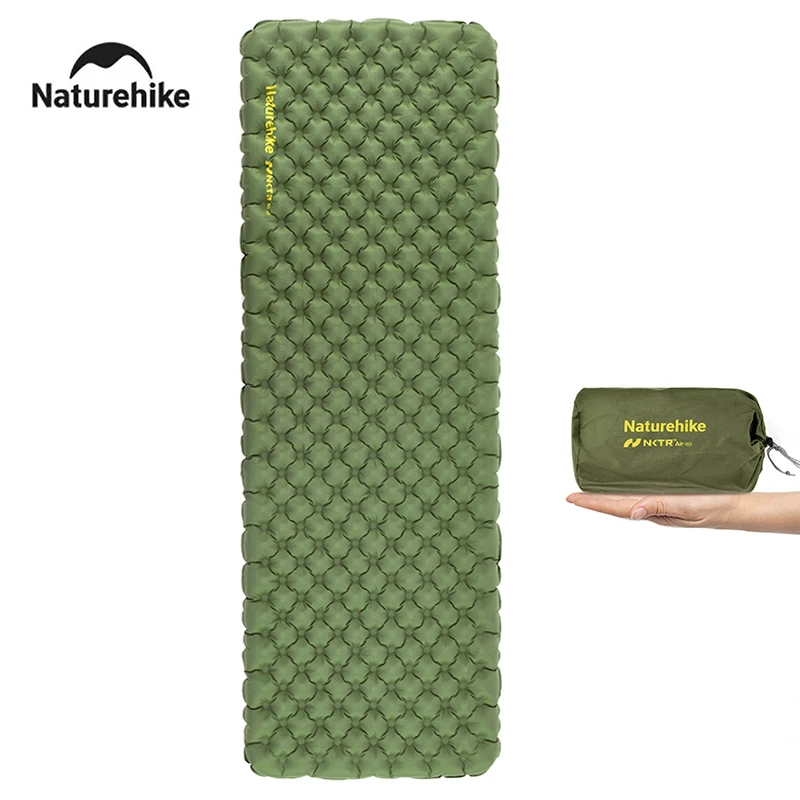
Who it suits: Backpackers, alpine trekkers, and shoulder-season campers who prioritize a compact packed bundle without sacrificing ground warmth.
Practical limitations & questions to verify: The listing advertises a 4.6 R-value, but does not provide lab test certificates in the overview. Before relying on it for sub-freezing excursions, message the seller to ask whether this rating was tested according to ASTM F3340 standard procedures. Also check the exact inflated dimensions against your height and tent footprint.
2. Maximum Ground Clearance: Extra Thick 4-Inch Spliceable Sleeping Pad
For side sleepers who dread hip pain, extra volume is non-negotiable. This self-inflating/air hybrid design advertises a full 4-inch thickness and an integrated pillow contour. It also features edge buttons that allow two identical units to be spliced together side-by-side.
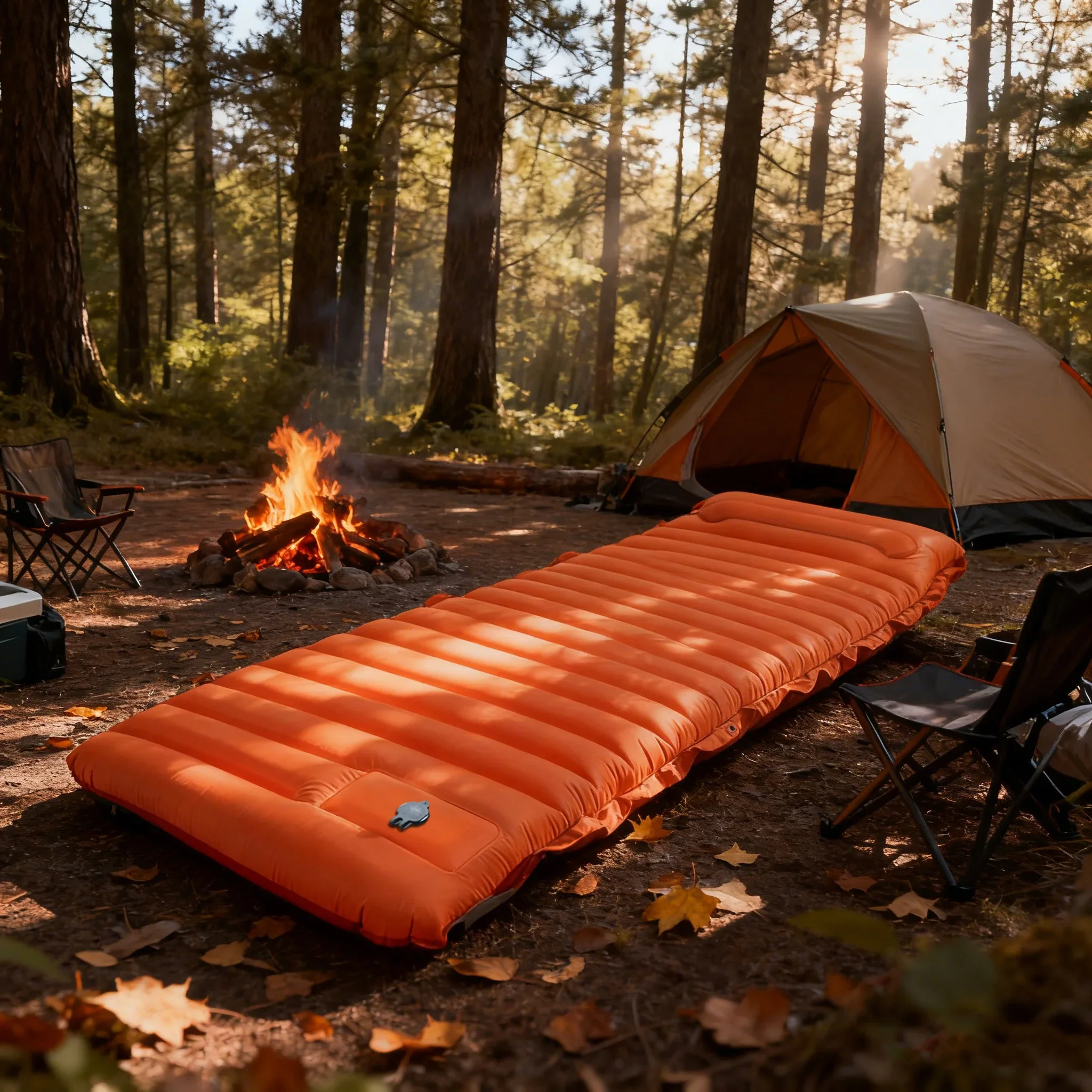
Who it suits: Dedicated side sleepers, car campers, and anglers who demand generous ground clearance and the flexibility to link two separate single mats into a double bed.
Practical limitations & questions to verify: Deep 4-inch pads consume significantly more interior tent volume and take longer to roll down tightly. While the listing notes both "self-inflating" and air cushion features, the exact internal construction (open-cell foam versus hollow air chambers) is unverified. Clarify with the seller how much manual or pump inflation is required after unrolling.
3. Continuous Comfort for Two: Outdoor Double Inflatable Mattress
Sharing a tent with a partner is significantly easier when you do not spend the night sliding into the crevice between two loose mats. This wide, two-person inflatable mattress provides an unbroken sleeping platform complete with twin pillow sections and an integrated pump area.
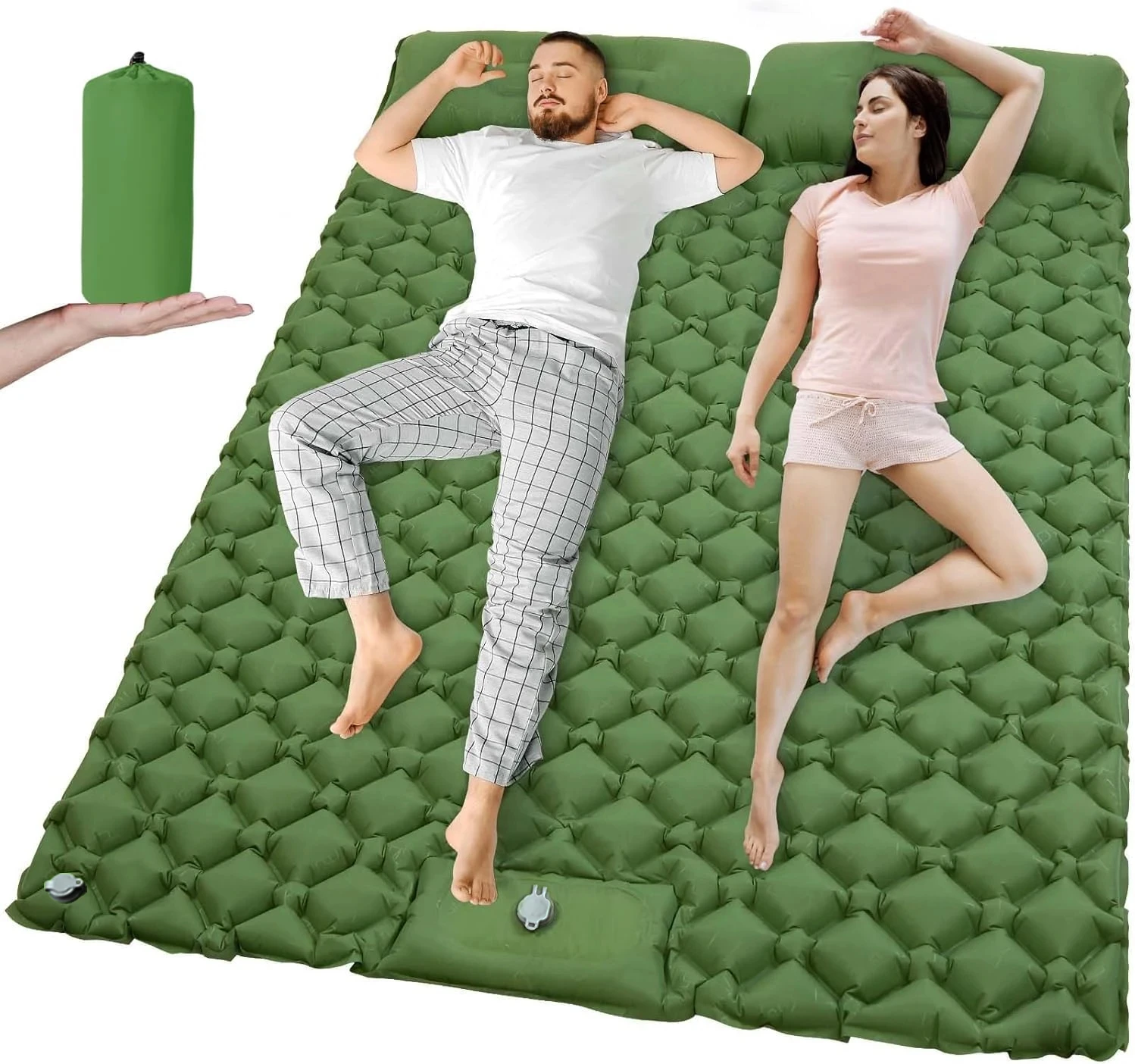
Who it suits: Couples, parent-and-child setups, and car campers sleeping in the back of an SUV or large dome tent.
Practical limitations & questions to verify: Double air pads transmit motion: when one person rolls over, the displacement of air can bounce the other sleeper. In addition, single punctures deflate the entire platform. Check the exact listing measurements to ensure the mattress width fits cleanly between your tent's inner sidewalls without pinching.
4. Fast Setup Accessory: Mini 1200mAh USB Rechargeable Air Pump
Blowing up large pads—especially double-width or 4-inch thick camping mattresses—by mouth after setting up camp can quickly leave you lightheaded. A dedicated micro-pump speeds up camp setup while deflating pads to a completely flat pack size.

Who it suits: Anyone using high-volume air pads or campers who want to eliminate internal condensation caused by human breath.
Practical limitations & questions to verify: Micro-pumps rely on high airflow at low pressure; they easily fill the volume of a mattress, but you may still need a couple of manual breaths or pump presses at the end to achieve firm sleeping tension. Check whether the included nozzle adapters match the specific valve diameter on your chosen sleeping pad before heading into the backcountry.
Mattress Comparison at a Glance
| Product | Stated Focus | Thickness / Capacity | Claimed Insulation | Best For |
|---|---|---|---|---|
| Naturehike Ultralight Pad | Hiking & Cold Resistance | Single (Ultralight) | Claimed 4.6 R-Value | Cool-weather backpacking |
| Extra Thick 4-Inch Pad | Pressure Relief & Cushioning | Advertised 4 in (Single) | Not stated | Side sleepers & car camping |
| Outdoor Double Mattress | Two-Person Coverage | Double / Extra Wide | Not stated | Couples & vehicle camping |
| Mini Rechargeable Pump | Inflation / Deflation Tool | 1200mAh battery accessory | N/A | Hands-free setup & pack-down |
Practical Field Care & Durability Advice
Regardless of which sleeping pad you carry, keeping it puncture-free and dry requires basic camp hygiene:
Essential Field Care Rules:
- Clear the tent floor: Run your bare hands across the tent footprint before laying down your mattress to detect rogue pine needles, sharp gravel, or hidden thorns.
- Avoid over-pressurizing in direct sun: Air expands as ambient temperatures rise. If you leave your mattress fully inflated inside a closed tent during midday heat, internal pressure spikes can burst baffle seams. Vent a little air during the day.
- Pack a field repair kit: Always keep a small tube of adhesive sealant and adhesive patches packed inside the mattress stuff sack. A small puncture on night one should not ruin an entire weekend.
- Air-dry completely at home: After any camping trip, unroll your pad and open its valves in a dry room for 24 hours to let trapped internal condensation evaporate before long-term storage.
Final Checklist: Finding Your Best Match
Before confirming your purchase, ask yourself where you will use the pad most frequently:
- If you hike long distances into unpredictable temperatures, prioritize weight and a verified R-value (such as the Naturehike ultralight model).
- If you wake up with hip soreness on standard pads, forgo ultralight minimalism and opt for deep vertical depth (such as a 4-inch thick single mattress).
- If you camp with a partner in a roomy tent, an integrated double pad eliminates middle sagging and sliding.
- Pair high-volume inflatables with a compact wireless pump to make setting up and breaking down camp quick and effortless.
More from The Night Shift
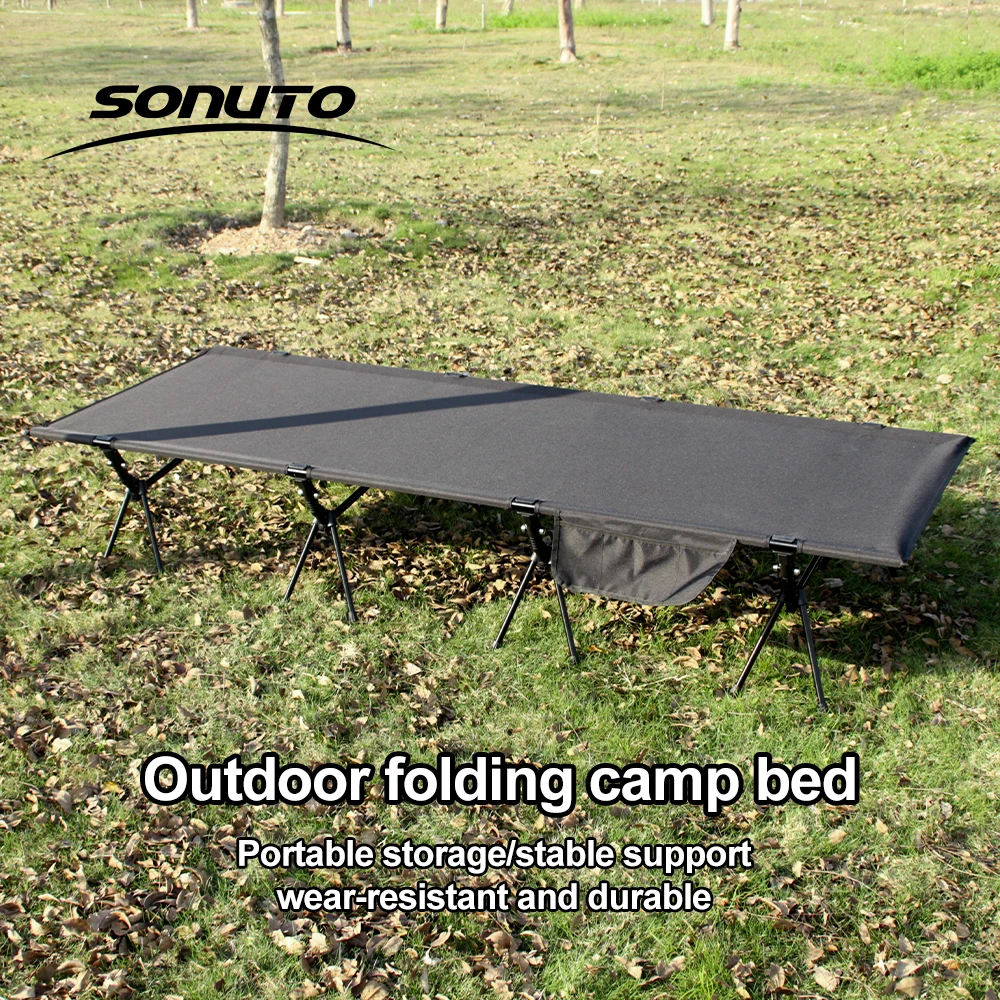
How to Choose a Camping Cot: Comfort, Pack Size, and Tent Clearance
Compare portable camping cots, understand key dimensions, frame heights, and tension systems, and find the right sleep setup for your tent.